
The right glass helps determine how a drink tastes and how festive a table looks. At events, practical questions come into play: how many glasses do you need per guest, which glass is suitable for spritz or cocktails, and how do the glasses get to you and back again safely?
In this guide we present our premium-quality wine and champagne glasses, show which glass goes with which drink, and explain how to plan the quantity of glasses and what you should know about champagne towers, calibrated beer glasses and glass racks.
In brief: which glass for which drink?
- Red wine: large red wine glass – for red wine only
- White wine, rosé, spritz: white wine glass
- Sparkling wine, prosecco, champagne: slim champagne flute or coupe
- Cocktails and longdrinks: longdrink glass, old fashioned glass or coupe
- Water and soft drinks: all-purpose glass or longdrink glass
- Beer sold to guests: calibrated beer glasses
Premium quality
Wine glasses: large, brilliant and robust
Our wine and champagne glasses come from a high-quality catering series: glass with a particularly hard surface – making it scratch-resistant, impact-resistant and still brilliant and clear after many wash cycles. Bowl and stem are drawn from one piece – this makes the glasses stable and gives them a particularly refined look. The modern, slightly geometric bowl shape gives every table a clear, elegant look.
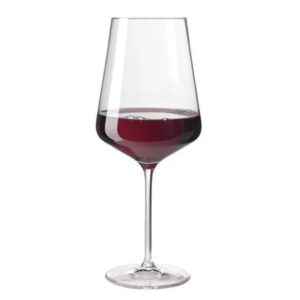
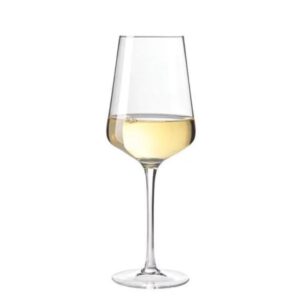
Our wine glasses are comparatively large. The wide bowl of the red wine glass gives full-bodied red wines room to develop their aroma – because it is so large, it is really only intended for red wine. The slightly smaller white wine glass is the more versatile glass: for white wine, rosé and also for spritz drinks such as Aperol Spritz or Hugo.
Typical uses: wedding dinners, galas, corporate events, wine tastings and summer parties with a spritz bar.
For a toast
Champagne flute and coupe: the festive moment
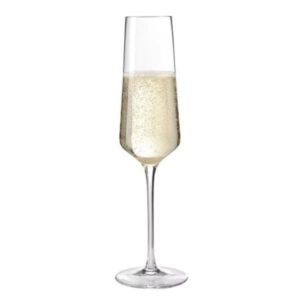
The champagne flute belongs to the same premium series as our wine glasses – with a drawn stem, a hard, scratch-resistant surface and high impact resistance. At 26 cm high, it is an elegant, slim flute for sparkling wine, prosecco, champagne and mimosas. The bubbles last a long time in the narrow bowl.
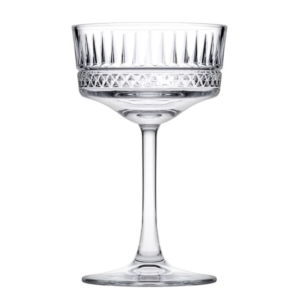
The coupe is the nostalgic, wide champagne saucer – ideal for a champagne tower, for cocktails such as an espresso martini or even as a small bowl for snacks and desserts.
Typical uses: drinks reception, wedding, anniversary, New Year’s Eve and gala.
Which glass for which drink?
With this overview you will find the right glass for every drink on your drinks menu.
| Drink | Matching glass | Note |
|---|---|---|
| Red wine | Red wine glass | Large bowl for full-bodied wines – for red wine only |
| White wine / rosé | White wine glass | Also suitable for light red wines |
| Aperol Spritz / Hugo / Sarti Spritz | White wine glass | Enough room for ice and soda |
| Sparkling wine / prosecco / champagne | Champagne flute | Slim flute, the bubbles last a long time |
| Champagne in a tower | Coupe | As a champagne tower with 4, 5 or 6 tiers |
| Cocktails (e.g. espresso martini) | Coupe or old fashioned glass | With or without ice, depending on the recipe |
| Longdrinks / gin and tonic | Longdrink glass | Robust and stackable – ideal for the bar |
| Water / soft drinks / juice | All-purpose glass or longdrink glass | One glass per guest at the table |
| Lager / wheat beer | Willi beer glass 0.3 / 0.5 l, wheat beer glass 0.5 l | Calibrated – also for selling drinks |
Bar and table
Longdrink, all-purpose and old fashioned glasses
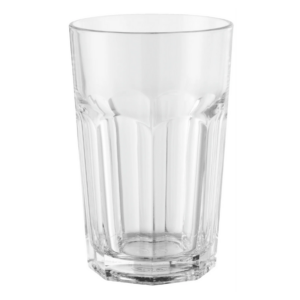
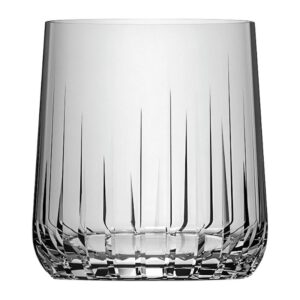
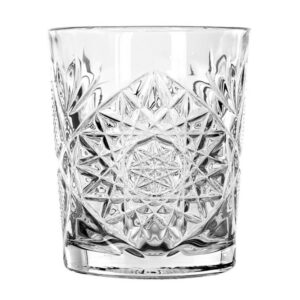
For the bar, water and soft drinks there are three glasses: the 360 ml longdrink glass is robust and stackable – the standard glass for longdrinks, cocktails, spritzers and lively parties. The 315 ml all-purpose glass is the simple all-rounder for water, juices and soft drinks at the table. The 355 ml old fashioned glass brings a bar atmosphere to cocktails, whisky and drinks on the rocks.
Typical uses: bar and cocktail station, water with dinner, corporate events and parties.
The eye-catcher
Champagne tower: how it works
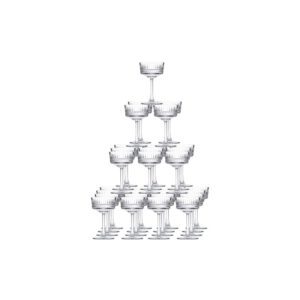
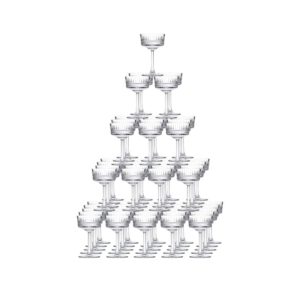
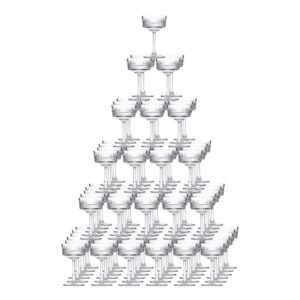
A champagne tower made of coupes is a festive highlight for weddings, anniversaries or galas. We offer it as a set with 4 tiers (30 glasses plus 10 spare glasses), 5 tiers (55 plus 5) and 6 tiers (91 plus 9). The coupes are sturdy and are therefore well suited to building a pyramid.
It is best to fill the glasses individually before the tower is built – that way it stays stable and no sparkling wine is lost. Whether we build the tower for you depends on the delivery package booked.
For selling drinks
Calibrated beer glasses: when they matter
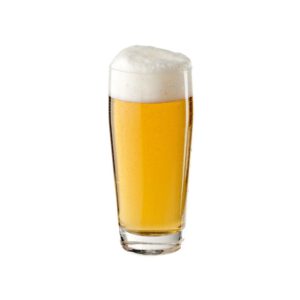
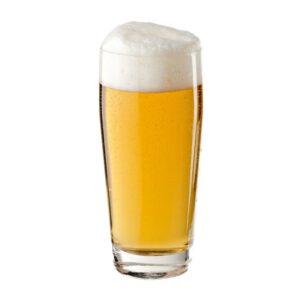
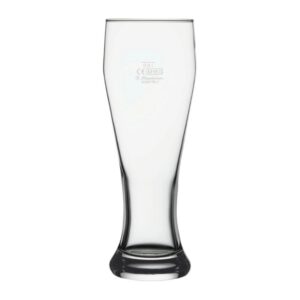
If drinks are sold – for example at a club party or summer party – serving vessels must be calibrated, i.e. carry a fill line with the nominal volume. Our Willi beer glasses for lager with 0.3 and 0.5 litres and the 0.5-litre wheat beer glass are calibrated and therefore suitable for selling drinks.
Typical uses: club parties, summer parties, corporate events with beer service and Bavarian evenings.
Planning: how many glasses do you need?
1. Glasses per guest
For a drinks reception, allow 1 to 1.5 champagne flutes per guest, because guests put their glass down and take a new one later. For dinner, plan one glass per guest for each drink served – for example white wine, red wine and water. Add 10 to 20% reserve.
2. Think in glass racks
We deliver the glasses in glass racks: champagne flutes in 36s, white wine glasses and coupes in 20s, red wine glasses in 16s and all other glasses in 25s per rack. If you plan the quantity in full racks, you automatically have some reserve.
3. Changing glasses and the bar
At a bar or when switching between sparkling wine, wine and longdrinks, demand rises considerably. Plan more generously here or check with your caterer whether glasses will be washed during the event.
4. Return
You don’t have to wash up – final cleaning is included in the rental price. After the event, simply put the glasses back into the glass racks. Breakage and missing glasses are charged at replacement cost.
5. Delivery
How delivery, set-up and collection work and which packages are available can be found under How it works & FAQ.
Expert tip from Munich Event Rent
For spritz drinks, go for the white wine glass, not the red wine glass: it is easier to handle, needs less ice and looks just right with a slice of orange. The large red wine glass shows its strengths with red wine for the main course.
Glasses compared side by side
| Glass | Max. capacity (filled to the brim) | Height | Pieces per glass rack | Ideal for |
|---|---|---|---|---|
| Red wine glass | 750 ml | 25.5 cm | 16 | Red wine |
| White wine glass | 560 ml | 24 cm | 20 | White wine, rosé, spritz |
| Champagne flute | 280 ml | 26 cm | 36 | Sparkling wine, prosecco, champagne |
| Coupe | 260 ml | – | 20 | Champagne tower, cocktails |
| Longdrink glass | 360 ml | – | 25 | Longdrinks, spritzers, water |
| All-purpose glass | 315 ml | – | 25 | Water, juice, soft drinks |
| Old fashioned glass | 355 ml | – | 25 | Cocktails, whisky, drinks on the rocks |
| Willi beer glass / wheat beer glass | 0.3 / 0.5 l | 14.8 / 18.5 / 23.4 cm | 25 | Beer, calibrated |
The capacity indicates the volume up to the brim – of course, much less is poured. This makes the large wine glasses in particular look generous and refined even when filled normally.
How to find the right glasses
If you want to decide quickly, this logic helps:
- Drinks reception: champagne flutes, 1 to 1.5 per guest.
- Dinner with wine: white wine glass, red wine glass and all-purpose glass for water.
- Spritz bar: white wine glasses.
- Cocktail bar: longdrink glasses, old fashioned glasses and coupes.
- Selling drinks: calibrated beer glasses.
If you already know what you need, go straight to the matching category:
Frequently asked questions about glassware for events
Which glass should I use for Aperol Spritz?
For spritz drinks such as Aperol Spritz or Hugo, we recommend the white wine glass. It offers enough room for ice and soda. The red wine glass is too large for this.
Why are the wine glasses so large?
A large bowl gives the wine room to develop its aroma and looks generous and refined even when filled normally. You will find the exact dimensions and the maximum capacity in our comparison table.
How robust are the glasses?
Our wine and champagne glasses come from a catering series with a particularly hard surface. They are scratch-resistant, impact-resistant and stay brilliant even after many wash cycles. The stem is drawn from one piece with the bowl.
How many champagne flutes do I need for a reception?
We recommend 1 to 1.5 champagne flutes per guest, as guests often put their glass down and take a new one later. We deliver champagne flutes in glass racks of 36.
How many glasses are in one glass rack?
We deliver champagne flutes in 36s, white wine glasses and coupes in 20s, red wine glasses in 16s and all other glasses in 25s per rack.
Do I have to wash the glasses?
No. Final cleaning is included in the rental price. After the event, simply put the glasses back into the glass racks.
What happens if a glass breaks?
Breakage and missing glasses are charged at replacement cost.
How does the champagne tower work?
The champagne tower consists of coupes and is available with 4, 5 or 6 tiers including spare glasses. Ideally, the glasses are filled individually before the tower is built.
When do I need calibrated beer glasses?
If you sell drinks, the glasses have to be calibrated. Our Willi beer glasses with 0.3 and 0.5 litres and the 0.5-litre wheat beer glass are calibrated.
Which glass is suitable for water at the table?
The all-purpose glass or the longdrink glass is suitable for water, juices and soft drinks at the table.
Non-binding advice
Not sure which glasses you need?
We are happy to help you with your planning. Tell us the type of event, number of guests and your choice of drinks – we will recommend the right glasses and quantities and, on request, prepare an individual quote.
Why Munich Event Rent?
- Premium-quality wine and champagne glasses
- Glasses for several hundred guests, delivered in glass racks
- Final cleaning included – you don’t have to wash up
- Delivery, set-up and collection in the Munich area